An end-grain cutting board is built from a few dozen individual strips of wood, each one ripped narrow, stood on its edge, and glued back together twice, so the face grain you started with disappears and the end grain does the work on top. That's the entire trick behind the checkerboard pattern that makes the whole thing look advanced. It isn't advanced. It's repetitive. The same handful of operations run in a loop, which turns out to be exactly what a good beginner woodworking project needs when your last finished piece was a bookshelf that leaned four degrees to the left and got demoted to holding paint cans.
Quick disclosure before anything else: this site runs on affiliate links, including ones for TedsWoodworking, and I earn a small commission if you buy through them at no extra cost to you. I only point at plans and tools that have actually gone through a real project on my own bench, not just a sales page I skimmed.
Why This Beats Another Beginner Bookshelf
In my day job managing IT projects, most mistakes are reversible: you roll back a deployment, restore from a backup, undo a bad merge. Woodworking doesn't work that way. Run good walnut through a table saw wrong and there's no undo button, just glue and acceptance. That's part of why an end-grain cutting board makes a solid second project: the steps are fixed and sequential enough that if you follow them in order, the physics does most of the work for you. Rip, glue, cross-cut, flip, glue again. It's closer to running a build script than freehanding a design, which matters for someone whose first finished piece leaned four degrees left.
Getting the Kerf Math Right Before You Cut Anything
Kerf is the width of material the blade actually removes with each pass, close to an eighth of an inch on a standard blade. Run ten cuts through a board and you've lost more than an inch of length you never planned for.
My first attempt at an end-grain board, a scrap-pine trial run, came out two inches short of the size I wanted because I hadn't priced in what the blade takes. A cut list that separates rough dimensions from final dimensions catches that before it happens, which is the actual value of a plan like TedsWoodworking: not inspiration, just correct math before the saw ever starts.
Rip cuts are where I learned this the hard way. Before I owned a circular saw, I tried ripping long strips of walnut down to width with a jigsaw clamped to a straightedge, on the theory that a blade is a blade. It isn't. The jigsaw wandered off the line, left a rough, wavy edge that needed a full pass on the jointer to fix, and ate up most of an afternoon that should have gone quickly. A circular saw with a straight fence, or a table saw if you have one, isn't optional for this project. A jigsaw rip is a workaround, not a technique.
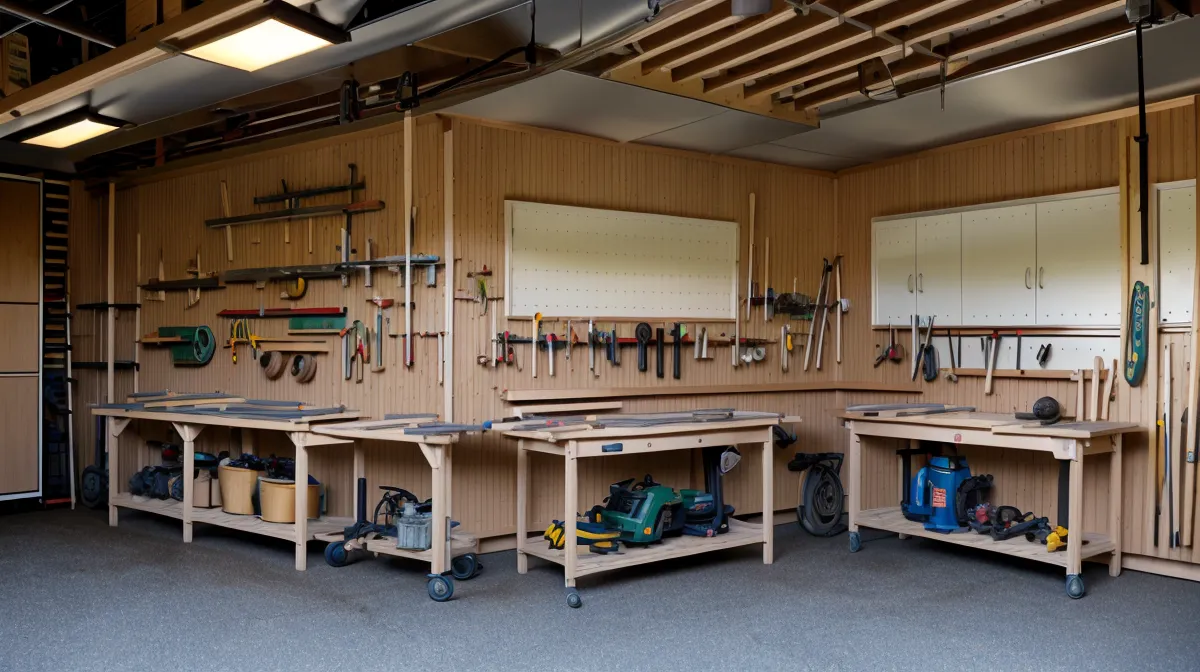
If your shop is still at the stage where every tool lives wherever it was last set down, building a mobile tool cart before a big glue-up will save you from hunting for the right clamp with glue already setting on your hands.
Cross-cuts have their own accuracy problem. My old miter saw drifted a degree or two depending on the day, which is fine for framing but not for a board built from dozens of small segments that all need to close into straight lines. Building a dedicated miter saw station with a squared fence fixed that — without it, a cutting board photographs like a trapezoid no matter how clean the glue-up looks, and no amount of sanding corrects an angle problem.
Grain Direction: The Difference Between a Cutting Board and a Bowl of Splinters
Grain direction is the one variable that decides whether this ends up as a cutting board or a warped, splintery paperweight. Face grain is what shows on a regular plank — the long lines running the length of the board. Edge grain shows when that same board stands up on its side. End grain is different: it's the exposed tips of the wood fibers, the pattern you get from slicing straight across the trunk. It's what faces the knife on this kind of board, because end grain is more forgiving on a blade edge and closes slightly around a cut instead of showing a permanent scar the way face grain does.
The build sequence exists to put end grain on top on purpose. Strips get glued face-to-face first, that panel gets cross-cut into new strips, and every other one flips up onto its end before the second glue-up. Each flip rotates the grain ninety degrees from its neighbor, and alternating the direction that way is also what keeps the whole panel from cupping as it gains and loses moisture. A full explanation of wood movement is really its own subject. The short version: wood moves across the grain, not along it, and alternating direction cancels most of that out across the width of the board.
Gluing all those strips edge to edge is technically a form of joinery too, though a simpler one than the mortises and dovetails that show up once you move into casework — that's a deep enough subject on its own. Species choice matters here mostly for contrast: walnut and maple read clearly against each other at end grain in a way two similar-toned woods won't, though picking species for other kinds of projects is really its own comparison.
A guy named Walter, who's at the Rockler on Nicollet most Saturday mornings and claims he can tell walnut from maple sawdust by smell alone, looked at the dry strips before glue-up and said the contrast would read fine once the oil went on. He was right, though I still can't tell the difference myself by nose.
Before glue touches anything, dry-fit the whole stack. I set mine down on the concrete floor with no clamps and no glue, and watched all four corners touch flat without a single one rocking or lifting. If a corner lifts, that strip is slightly out of square, and it goes back across the jointer before glue, not after. Clamping a twisted stack flat just stores stress in the joint that shows up later as a crack.
How Much Clamp Pressure Is Too Much?
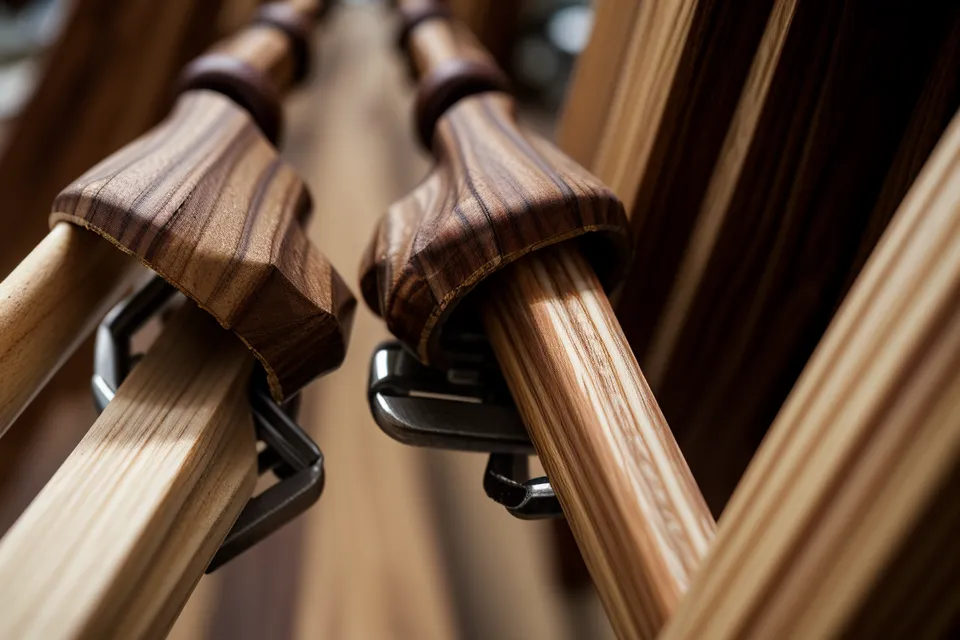
Once the dry fit checks out, glue goes on fast, especially in a Minnesota garage where humidity can swing working time by several minutes in either direction. The failure mode to watch for is over-clamping. Squeeze too hard and you force nearly all the adhesive out of the joint (what's called a starved joint), and the panel can bow slightly under that kind of pressure instead of sitting flat. The rule now: tighten until the joint lines close and a thin, even bead of glue squeezes out along the length, then stop. A continuous heavy bead running the whole way down means you've already gone too far, and it's worth backing off a turn on every clamp and rechecking with a straightedge before it skins over.
Having the assembly sequence already mapped out (which strip goes where, in what order) next to the clamps matters more at this stage than any other, since there's no time to improvise once glue starts setting. That's the real value of a resource like the TedsWoodworking plans: not the inspiration, just having the sequence decided before your hands are covered in glue.
The Sanding Sequence That Actually Matters
Sanding an end-grain board is unforgiving, because every scratch shows once oil hits the wood and darkens it. The sequence that actually holds up for a furniture-grade surface is 80 grit, then 120, then 180. Skip a step in that chain and the coarser paper leaves cross-grain scratches the finer grit can't fully erase, and they show up clearly under oil. 220 grit comes later, between coats of finish, not as part of getting the raw wood ready; using it as a final pre-finish step doesn't hurt anything, it just adds time without fixing what the 180 grit didn't already handle.
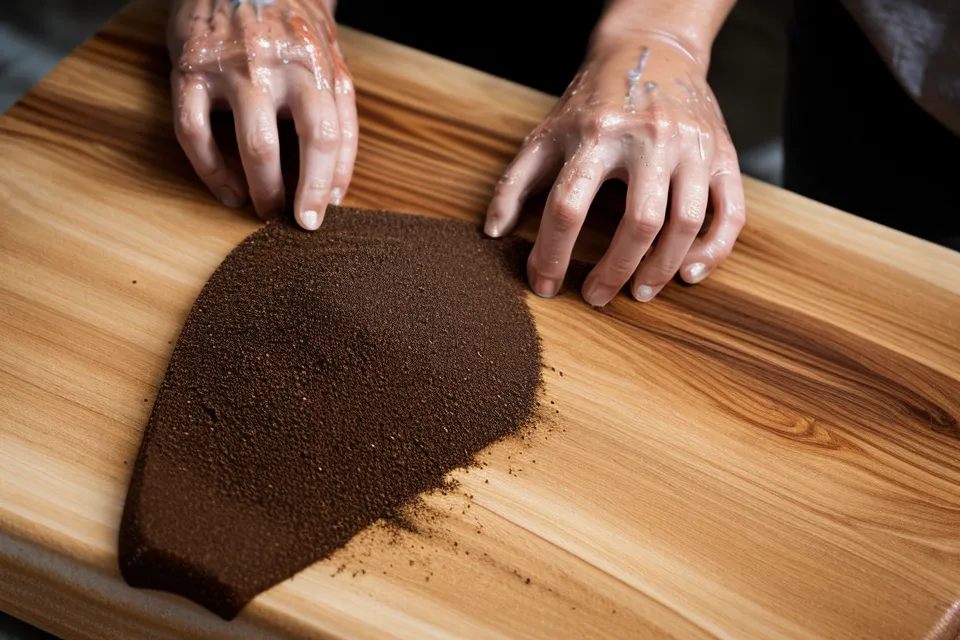
My bargain-bin orbital sander didn't survive contact with this project. It left faint swirl marks across the surface that looked like tiny crop circles once the oil brought them out, and I ended up borrowing a better unit from a neighbor for the final pass. By the time all three grits were done, the fine walnut dust had turned the black casing of my cordless drill a dull, dusty brown, like it had been rolled in cocoa powder.
A friend of mine, Ray, who's turned furniture refinishing into his own hobby, would probably have built a dedicated jig just to hold the sander at a consistent angle (Ray builds jigs to hold his other jigs at this point), but checking the surface by eye every few passes worked fine here. How solidly your bench holds a board still while you're sanding comes down to bench setup, which is its own bigger topic, and the same goes for how you keep a drawer full of bar clamps from turning into a pile you have to dig through.
None of that dust is something to just blow out the door and forget about, either. I've had to get more deliberate about dust collection on a budget since moving the shop into the garage, since walnut dust settling on every flat surface in the house is not a great way to stay married.
Finishing With Mineral Oil, Without Overthinking It
Routers punish bad grain direction fast. I tried adding a juice groove around the edge before finishing, and the router caught end grain at one corner and kicked back hard enough to nearly take a bite out of the board. I skipped the groove entirely after that and called the plain edge a design choice instead of a compromise. The more complicated routing work can wait for a project like DIY Adirondack chairs, where the grain runs in more predictable, single directions.
Finishing an end-grain board is close to the simplest step in the whole build. Food-grade mineral oil goes on generously with a cloth, sits for a while to soak into the end grain, and gets wiped off before it turns tacky. The dry, dusty walnut turns a deep, warm brown almost immediately, and the maple strips lighten into a clean, creamy contrast next to it, a shift that finally makes the checkerboard pattern readable instead of just implied. There's a longer conversation about film finishes, cure times, and recoat schedules for furniture, but none of it applies here, since mineral oil isn't building a film at all — it's conditioning the wood, and you reapply it every so often instead of curing it once and moving on.
Is an End-Grain Board Worth Your First Weekend?
Whether this is worth your first free weekend comes down to one piece of equipment. Without a table saw, or at least a decent circular saw and a squared crosscut setup, start with something simpler and circle back to end-grain work later, rather than fighting the jigsaw-and-hope method that cost me an afternoon. With that gear in place, this is a solid second or third project precisely because the steps are so linear. There's very little room to freelance, which is exactly what a shaky beginner needs.
On a pure cost basis, hardwood, a new router bit, and a couple of weekends of labor add up to more than most people guess, and a comparable board is probably sitting in a kitchen store somewhere for less hassle. As a way to close out a work week that was mostly spreadsheets and status meetings, though, it's harder to put a number on. The only review that mattered in my house was simpler anyway: my wife didn't ask what shape it was supposed to be, she asked if we could use it for the cheese board on Sunday.
Standing in a garage staring at a stack of lumber with no idea where to start, skip the bookshelf and pick something with a fixed process instead. That's really the only workshop advice worth repeating. Grab an actual set of woodworking plans: TedsWoodworking keeps earning a spot on my bench because with that many plans on file, there's usually one that matches whatever skill level I'm actually at that month, not the one I wish I were at. Whether any single blueprint is worth downloading is really its own separate question, but this one at least had rough and final dimensions listed separately, which is what saved this particular build. If sheds and outdoor structures are more your speed than furniture, My Shed Plans covers that ground instead. Just stop eyeballing it. Your table saw blade and your glue's open time will both thank you.