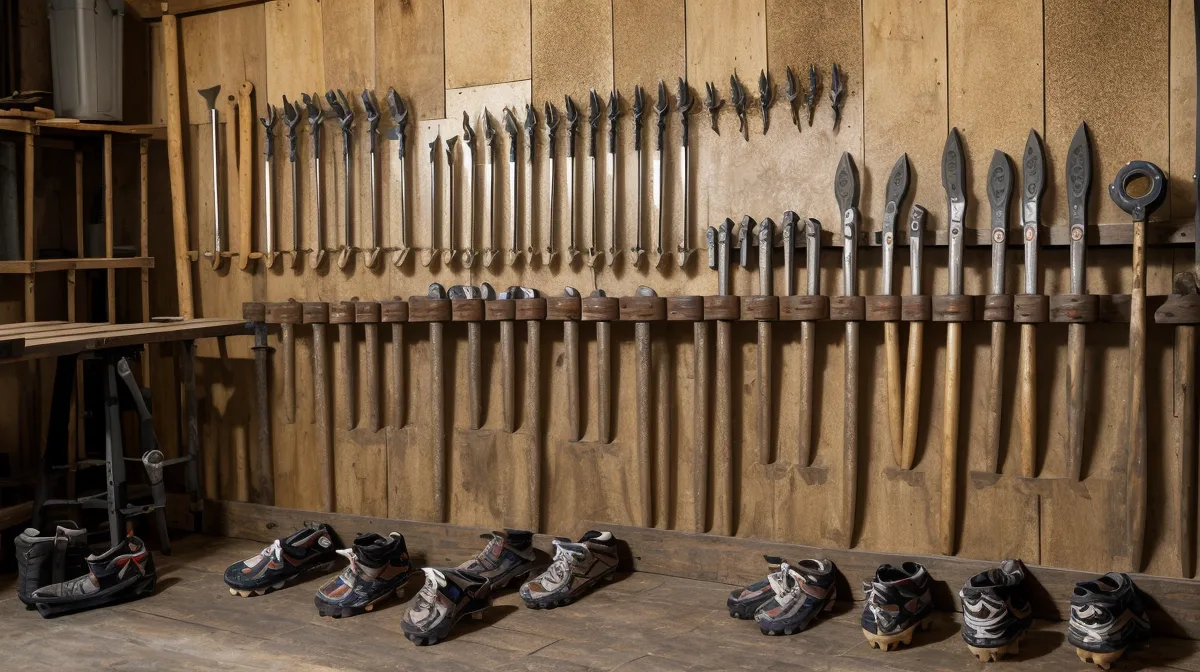
My pegboard panel sorts tools by whichever one got used last, not by type, so the tape measure hides on a different hook every week. That's the garage organization problem a French cleat wall actually solves. The whole system is built from little more than a 4 feet by 8 feet sheet of plywood, some scrap hardwood, and gravity doing the actual work. It's also the workshop storage question I get asked more than any other: does a DIY french cleat wall for garage tool storage really hold up, or does it turn into one more half-finished project leaning against the drywall? Short answer: it holds up, if a handful of details go right. Long answer is everything below, organized around the real questions readers send in instead of one long story about my own build, which tends to be more useful than most DIY woodworking write-ups that never get past the highlight reel (mine included, most weeks).
The Mechanics of a French Cleat Wall
A French cleat is just a beveled ledge, split in two. Rip a board at 45 degrees, screw the top half to the wall with the angled edge facing up, then screw the bottom half to the back of whatever's hanging (a shelf, a tool holder, a whole cabinet) with the angled edge facing down. Gravity locks the two halves together and there's no other joint involved. It's not dovetails or mortise-and-tenon joinery. The whole trick is one bevel and a wall stud, which is a lot more forgiving than most joinery types for someone who reads about technique more than he practices it. What sets it apart from pegboard or slatwall is that the entire system moves: pull a holder off, shift it six inches, screw nothing new into the drywall. For garage tool storage specifically, that flexibility matters more than it sounds, since the tools used weekly in April aren't always the ones reached for in December.
Plywood or Hardwood for the Cleats?
Most plans call for ripping the cleats from the same sheet as the backer panel — one trip to the lumber yard, one 4 feet by 8 feet sheet of 3/4-inch plywood, done. That's fine for the flat panel behind everything. It's a worse idea for the cleats themselves, because a 45-degree bevel cut through plywood exposes every layer of veneer to the screw, and layered wood doesn't hold a lag screw under load the way solid stock does — the layers work loose from the stress over time. Ash and oak scraps solved that for me. Solid hardwood grips a screw like it grew around it instead of just sitting next to it, and it shrugs off the weight of a circular saw hanging six inches off the wall.
Species selection matters more here than people expect — a soft species crushes under the same screw pattern a dense hardwood shrugs off, which is worth knowing before raiding the scrap bin for cleat material. If the backer panel needs to be wider than one sheet, narrower boards get glued edge to edge instead, and grain direction on that glue-up matters more than most people think — enough that it deserves its own explanation somewhere else.
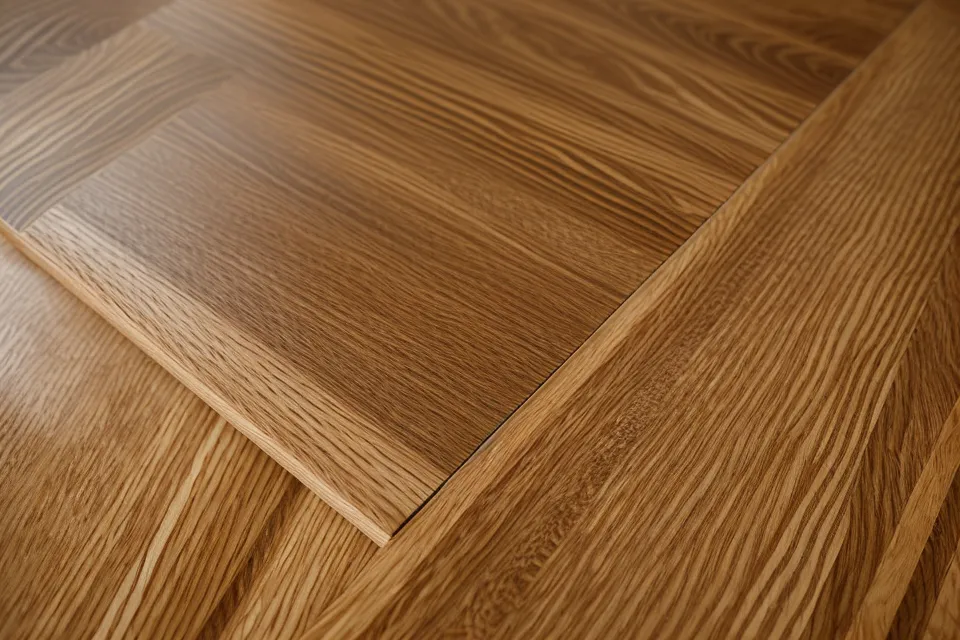
I ran a finger down one of those seams after pulling the blue tape off and couldn't find the joint by feel — no ridge, no gap — which is really the only test that tells you the glue-up worked. Ripping those bevels happened on a workbench that's collected more layout marks and dried glue smears than clean cuts at this point, with table saw dust drifting into a pile a shop vac barely keeps up with. Dust management for a rip cut like that is its own rabbit hole I won't get into here.
Do I Need a Cut List, or Can I Just Follow a YouTube Video?
Get the cut list before you touch a saw. I learned this the hard way, following along with a YouTube build in real time instead of downloading the actual cut list first — pausing the video every few minutes to guess at a measurement instead of just reading it off a page. Two cleat pieces came out mismatched because a dimension shown on screen got misread for half a second. A written plan with an actual cut list catches that kind of error before the saw does, which is also where plan quality separates a good source from a bad one: some downloadable plans give you a cut list, a materials list, and a diagram, others give you a vague sketch and a promise, and you don't find out which kind you bought until you're already short a board.
Finding Studs Without Hitting a Wire
Standard framing puts studs at 16 inches on-center, and a stud finder gets close enough to mark a grid across the wall. Mine reads more like a random number generator than a precision tool (accuracy optional, apparently), so pilot holes confirm every mark before the long lag screws go in. On this build, the third pilot hole hit something that wasn't wood: a dull, dense thunk instead of the usual bite of a bit into pine. That thunk turned out to be a metal protector plate, installed for exactly one reason: stopping a drill bit from finding a wire or a conduit run behind the drywall. Shifting the whole layout two inches over and starting the pilot holes again felt tedious in the moment, but it beats explaining to an electrician why the garage lights went dark mid-project.
The Garage Floor Slopes, So Level Doesn't Always Look Level
The first long rail went up perfectly level — bubble dead center, screws driven, standing back to admire it — and it looked like the whole thing was sliding downhill (bubble be damned). Most garage floors slope slightly toward the door for drainage, which means a rail that's mathematically level reads as crooked to anyone standing in a room where the floor, the door frame, and the ceiling line all disagree with each other. Choosing between the level and the eyeball test came down to which one the room actually agreed with, and in this case that meant favoring what looked right over what the bubble reported. It's the same call worth making on a dashboard at work: if a number technically checks out but the output still looks wrong to everyone looking at it, the number is what needs a second look, not the audience.
Building Out Garage Tool Storage Beyond the Basic Wall
Once the rails are up, the actual holsters are where a French cleat wall earns its keep. A DIY cordless drill charging station mounted straight onto the same cleats solved the exact drill-pile problem that started this whole project. Heavier gear (a table saw sled, a router table top, anything with real mass) probably belongs on a mobile tool cart for a small two car garage instead of hanging on drywall, cleats or not; that's a separate build worth treating as a companion to the wall rather than a replacement for it.
Whether to finish the plywood backer and hardwood cleats is a smaller decision than people make it out to be. A coat of shellac or poly keeps the holsters from picking up grime, but skipping it entirely costs nothing structurally — finishing process matters far more on furniture than on shop fixtures nobody but you inspects closely. My wife's book-club friend Darlene saw a photo of a furniture build and asked if the same cleat idea would work for a hall-tree coat rack in her mudroom; she leaves five-star Google reviews for anyone she considers even mildly competent, so her praise gets taken with a grain of salt, but the system held up fine under coats and bag straps too. None of it matters much without a properly set up bench to build the pieces on in the first place — getting workbench setup right before any of this saves you from ripping bevels on something wobbly and ending up with a rounded-over guess instead of a clean 45 degrees.
What About Weight Limits, Winter Cold, and Running Out of Wall?
A reader named Priya, who first wrote in years ago after a cutting board article and has since worked her way up to bigger builds, asked directly how much weight one of these walls can hold. There's no clean number worth trusting here — it depends on how many studs each cleat crosses, how deep the lag screws bite, and how the load spreads across holsters instead of stacking on one hook. What holds true is that a hardwood cleat screwed into studs, not just drywall anchors, carries real shop tools without complaint.
Cold changes the equation more than expected in an uninsulated garage. Wood expands and contracts with humidity and temperature swings, and a panel that fit snug in August can develop a hairline gap by February — a wood movement question bigger than this article has room for. Budget for the whole wall stays modest compared to most shop upgrades, mostly plywood, a handful of hardwood scraps, and screws, though relative terms feel more honest here than dollar figures, since lumber pricing swings by yard and by season. Running out of wall space entirely usually means the next question isn't about cleats anymore — it's about outbuilding foundations and whether a detached structure makes sense, which is a different conversation than anything covered here.
For the next logical step once the floor is actually clear, how to build a DIY miter saw station covers what to do with the tools that never hang on a wall at all.
None of these questions have one answer that fits every garage, but the pattern holds steady: hardwood cleats over plywood ones, a real cut list before the saw touches wood, studs confirmed before lag screws go in, and level treated as a suggestion rather than a law once the floor gets involved. Get those four right, and the rest is just deciding how many holsters actually get built.