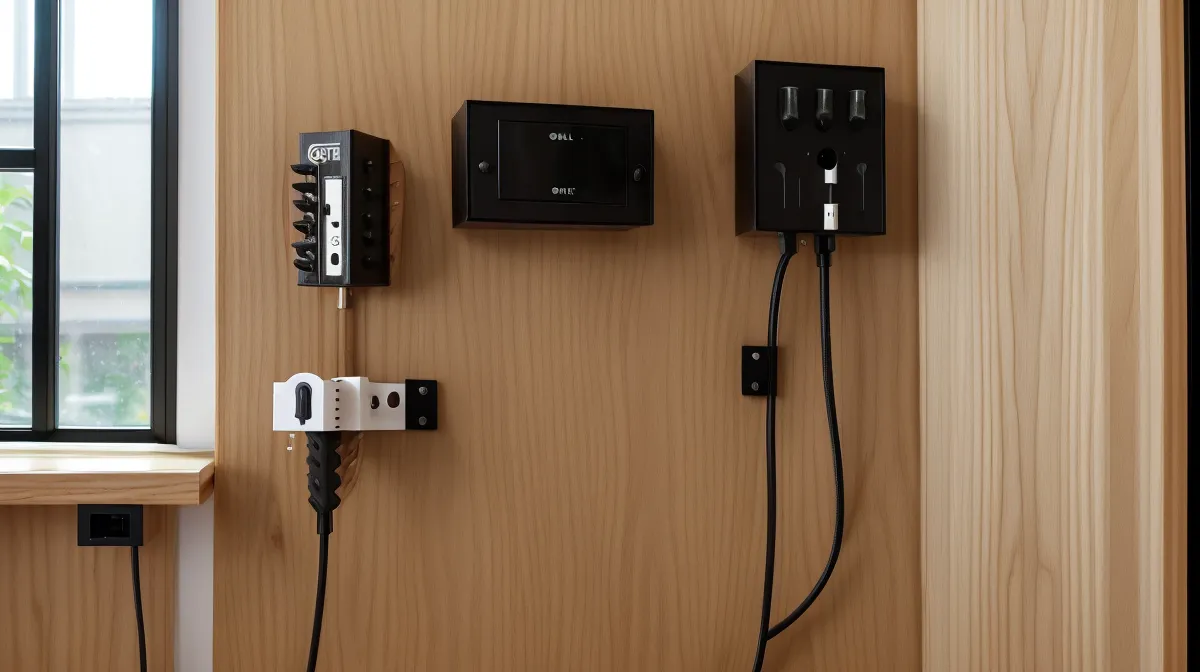
Five drills click into slots along the wall, chargers already wired in behind the shelf lip, and for the first time this corner of the garage isn't a pile of cords underfoot. Getting there took a full weekend of measuring, second-guessing, and one return trip to the plywood aisle for a sheet I'd undersized. The result reads less like a random project and more like an actual woodworking plan — a garage organization build that counts as a real workshop upgrade, not just another thing shoved against the wall. Storage and woodworking are, more often than not, the same project wearing different clothes.
Why This Garage Storage Upgrade Beats a Pile of Cords
Before the drills got their own slots, I'd been using an off-the-shelf plastic drill holder from the hardware store — the kind with two spring clips per bay. It held one drill reasonably well and cracked its clip loose within a month once a second drill went in beside it. That's a low bar, and it's basically why a dedicated build made sense once the pile hit four drills and two impact drivers with no clear home. Rather than sketch woodworking joinery from scratch, I started the actual layout from a stock plan pulled out of a plan library — whether that library's plans are worth the download is a separate conversation, this one just needed a footprint narrow enough for my wall. A dedicated station also solves the part nobody puts in the marketing photos: getting five chargers and their cords off the workbench is a shop storage problem as much as it is a cutting-and-gluing one.
Picking Plywood Thickness for a Five-Drill Load
Cabinet-grade birch plywood at three-quarters of an inch is the material here, not construction lumber, and that choice comes from a bad experience. Cheap construction-grade pine picked up from a big-box store warped within two weeks of coming in from the cold on an earlier project, so anything that has to hang flat against a wall now gets birch plywood from Rockler Woodworking & Hardware in Minnetonka instead. Birch is only one option among plenty of species that would work here — that's a bigger question than one shelf needs answered. Three-quarter-inch stock is thicker than this build strictly requires for looks, but five loaded batteries is real weight hanging off a set of dado joints, and thinner stock sags over a winter or two. Plywood also sidesteps the seasonal movement solid lumber deals with, which is its own rabbit hole of a topic. Fresh-cut birch still carries that sharp, faintly sweet smell that cuts through the cold, damp air of a Minnesota garage once the temperature drops, one of maybe three genuinely pleasant parts of working out there past October.
How Do You Space Slots So Batteries Don't Collide?
Slot spacing comes down to one measurement: the widest point of the drill's grip with the battery pack still attached, not the tool by itself. Measure that on the biggest drill in the lineup, add enough clearance on each side for a gloved hand to pull it straight out, and that number becomes every slot width — matching bays instead of custom-fitting each one saves a surprising amount of layout time. Batteries swell slightly as they age, too, so a slot cut exactly to today's dimensions is like provisioning a server for today's load and never for growth — it works fine until the day it doesn't. The chargers themselves get grouped behind the shelf rather than beside each drill, which keeps the cord routing predictable and stops five separate cables from turning into their own tangle on day one.
Cutting the Dado Shelf and Housing the Power Strip
The shelf itself sits in a dado groove cut across the plywood back rather than screwed to cleats, which keeps the front face clean. My first attempt came out an eighth-inch shallow because I didn't reset the stacked dado blade height after the previous cut, and I spent a good ten minutes in a cold garage deciding whether to start over or fill the gap with glue and sawdust and call it structural enough. I chose the patch — this is a garage shop, not a museum, and the joint holds under load either way. Dado joints are one path to housing a shelf like this; there's a whole separate conversation about which joint fits which load that this build doesn't need to settle. Behind the shelf, the power strip sits in its own shallow bay with a gap cut for airflow, since lithium-ion batteries hold up best stored somewhere between 32 and 105 degrees Fahrenheit and a sealed cavity traps heat fast. After routing that bay, I ran a hand plane over the front edge to clean up the router marks — the first pass sends the shaving off in one unbroken ribbon instead of the chopped curls a dull blade leaves, which is about as close to instant feedback as this hobby gets. The router bit itself ticks out a faint metallic ping as it cools on the bench afterward, the kind of small sound that means the cut is actually done.
Mount It With a French Cleat — But Check the Wall First
French cleats work because the weight of whatever's hanging pulls the joint tighter against the wall instead of prying it loose, and that part of the system needs no elaboration — it either holds or it doesn't. What it doesn't forgive is an out-of-plumb wall (older garages built before slab leveling got taken seriously tend to lean out at the top more than people expect), and mine leaned enough to matter. I ended up shimming the whole station with thin cedar strips so the drills wouldn't creep forward out of their slots over time. My neighbor Marcus wandered over partway through, took one look at me holding a shim strip in place by hand while I fumbled for a pencil, and asked why I hadn't just grabbed one of his bar clamps — he's got more of those than he has active projects, and he wasn't wrong.
Wall-Mounted or Mobile: Which Layout Fits Your Garage?
Wall-mounted only makes sense if your garage doesn't need that wall space for anything else, and mine does — this is a shared two-car garage, so floor-standing anything was never really on the table. If square footage isn't the constraint, a mobile cart parked wherever the workbench happens to be that week cuts out the walk back and forth to swap batteries entirely; I've been meaning to try building a mobile tool cart for exactly that reason. The decision really just comes down to whether your walls are spoken for or your floor is.
What's left over from a build like this is usually enough for something small — I used the plywood offcuts for a couple of quick woodworking projects using only scrap wood rather than letting them sit in the corner. The bigger payoff is simpler: five drills charged, a workbench that isn't buried under cords, and a wall doing a job the floor used to do badly. If there's one rule worth carrying into the next garage storage project, it's this — measure the thing you're storing with all its attachments on, not just the tool by itself, and add clearance for it to grow. That single habit would have saved most of the layout headaches here.