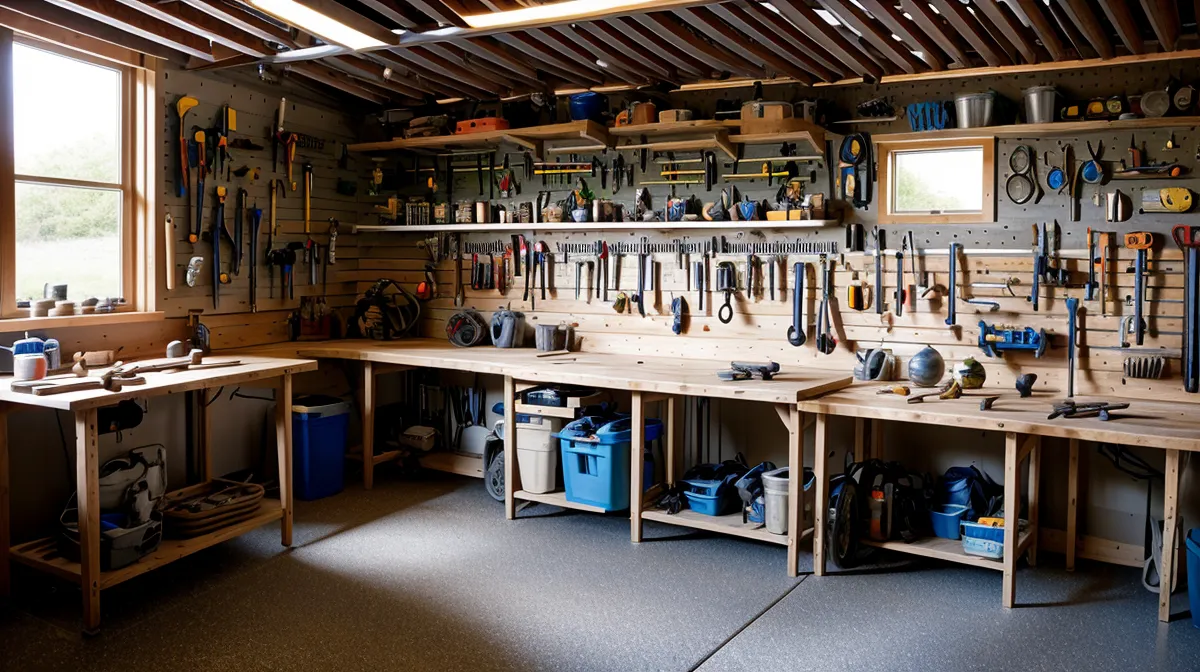
The gap between my shed roof and the house siding is exactly one inch, and that inch does more structural work than either wall. Most DIY shed tutorials skip past that detail entirely. They jump straight to "bolt a ledger board into the rim joist" like it's the only way a lean-to earns its name. It isn't. After six years of turning half my garage into a workshop and building everything from cutting boards to a dining table my wife tolerates having guests near, I've landed on a simpler rule for outdoor storage builds like this one: decide how much of your roof load you actually want crossing onto the house before you decide anything else.
That's the myth worth correcting here, because it drives every other decision in the build — the footing, the framing, even how the roof pitch behaves once it's sitting next to a wall that was never perfectly plumb to begin with. Get the load question right and the rest of the project stops feeling like guesswork.
The Ledger-Bolt Myth Around DIY Sheds
Most of the woodworking plans you'll find online for a lean-to assume you're lagging a ledger board straight into the house's rim joist. It's treated as non-negotiable, like a shed isn't really a lean-to unless it's physically hanging off the house wall. It isn't the only option, and for a lot of garages it isn't even the better one — bolting through siding means piercing the building envelope, which can complicate a homeowner's policy and gives water a direct path behind the ledger if the flashing job isn't perfect.
The real dividing line isn't attached-versus-freestanding as a yes-or-no choice. It's how much of the roof load you're routing through that ledger, since that's what actually changes your footing layout and your flashing detail — not whether a lag bolt exists somewhere in the assembly. I'll leave the footing math for another day; the point is that this decision happens before you touch a shovel, not while you're standing in the side yard with bolts already in hand.
Why Garage Organization Sometimes Means Building Outside It
My reason for building was embarrassingly simple: I couldn't reach my table saw without stepping over a snowblower and a stack of plastic garden pots. Garage organization advice usually means better shelving or a pegboard system, and I've tried both. Neither one solves the problem when the thing crowding you out is a mower with a gas tank. At some point the answer isn't a better bin — it's a separate structure.
A buddy of mine brews all-grain IPAs in his basement and has strong opinions about controlling variables — temperature, timing, all of it. When I told him I was building a shed instead of just insulating a corner of the garage, he said I was solving the wrong problem. He's probably right about brewing. He's wrong about lawn equipment, which doesn't care about variables, it just wants square footage. I worked that argument out of my system on a Saturday walk around Lake Harriet's bandshell lawn instead of finishing it with him directly.
Does the Foundation Need to Match the House?
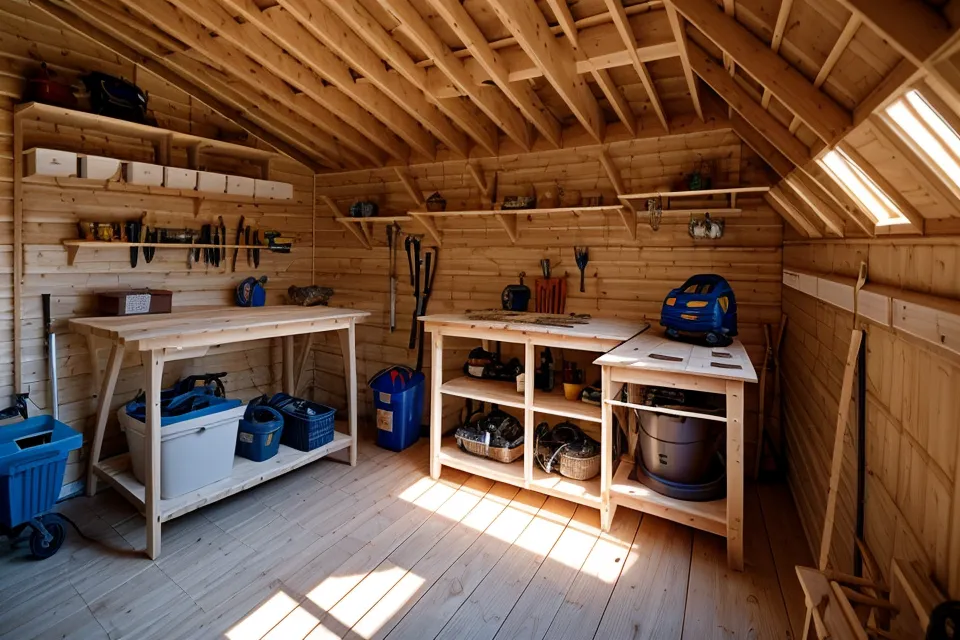
No, and this is where a lot of first-time builders overbuild. Minnesota's frost line runs deep enough that regional guidance treats ground heave as a given, which makes people assume a shed needs footings as serious as the house next to it. For something this size, a properly leveled bed of compacted gravel handles the seasonal movement without requiring piers. I still used pressure-treated lumber rated for ground contact on the base, because skimping there is the one shortcut that shows up as rot a few years later, not right away.
I won't pretend I evaluated a dozen plan sets scientifically before picking one — telling a decent set of shed plans from a padded one is its own exercise, worth a separate write-up entirely. I wanted something rated beginner-friendly that wouldn't fall over in a north wind, and I found it.
Framing to a Standard, Not a Guess
Sixteen inches on center isn't a spacing you get to skip because it's "just a shed." Keep it and every siding panel, every future shelf bracket, lines up without extra math later. Skip it because you're eyeballing studs to save ten minutes, and you'll be re-measuring for the next project that touches this wall. Framing is where the engineer in me feels most at home — it's logic and repeatable patterns until a corner shows up and you didn't account for the thickness of the adjoining wall, and then it's just a very physical bug report.
Rafter joinery is its own small puzzle, and I'll leave the technique itself to people who've written whole posts on it. What actually cost me time was a measurement taken from the wrong side of a pencil line — twenty minutes gone and a rafter turned into scrap before I caught it. Somewhere in the middle of framing I also kept trekking back into the garage hunting for a square, which is the same lesson I learned building a DIY woodworking clamp rack for a small garage shop. You don't notice how much a missing tool costs you until you're outside without it.
The Roofline Problem Nobody Warns You About
Nobody's house wall is as plumb as they think, and a lean-to makes that obvious in a way a freestanding shed never would, because the roofline sits parallel to it for its whole length. Mine had a lean I hadn't noticed in fifteen years of walking past it. The fix wasn't a teardown. It was shims at the base and a slightly adjusted rafter overhang, enough to make the two lines read as parallel from the yard even though they technically aren't.
I did the compound cuts on a miter saw, which only worked cleanly because I'd already set up a real station for it instead of balancing long boards on sawhorses — the same setup I wrote about when I built a DIY miter saw station for the shop. The moment I trusted the fix came at the corner trim: I held a flashlight behind the last 45-degree miter and no light came through on either side, which told me more about the whole roofline than any level had.
What Actually Failed: A Finish Lesson
Here's the part that didn't work. I tried finishing the cedar siding with an oil-based polyurethane in an unheated garage in January, on the theory that a coat is a coat regardless of temperature. It stayed tacky for nine days, collecting dust and bits of lint like flypaper, and I ended up sanding most of it back and waiting for a warmer stretch to redo it. Cure chemistry doesn't negotiate with a Minnesota garage in winter, and I should have known that going in.
Finish schedules — cure time, temperature, humidity, how long you actually wait between coats — are their own rabbit hole, and I'm not going to pretend I can do the topic justice in a couple of sentences here. The short version for anyone reading this in a cold climate: don't finish outdoor lumber somewhere you wouldn't want to sit yourself for nine days.
The One Rule That Actually Matters
If you take one thing from this, don't pick attached-versus-freestanding based on whichever tutorial you opened first. Decide based on how much roof load you're willing to route through a ledger board, build your footing and flashing plan around that answer, and everything downstream — framing, roofline, even how the finish holds up through a cold-weather build — gets easier to reason about. The shed is still standing, my garage floor is visible again for the first time in years, and the snowblower hasn't tripped me on the way to the table saw since.