The lid didn't creak or bend, it just went with a flat, brittle snap in my glove as I reached into the plastic tote by the garage door for a bag of ice melt. What came out was a jagged shard of gray plastic instead of the bag I wanted, and behind it sat three more totes in various stages of the same slow failure: warped sides, lids that no longer clicked shut, one with a crack running clean across the bottom like a fault line. That was the fourth tote to go this way in as many years, and it's the exact moment I decided the next storage upgrade would be a cedar storage shed instead of tote number five.
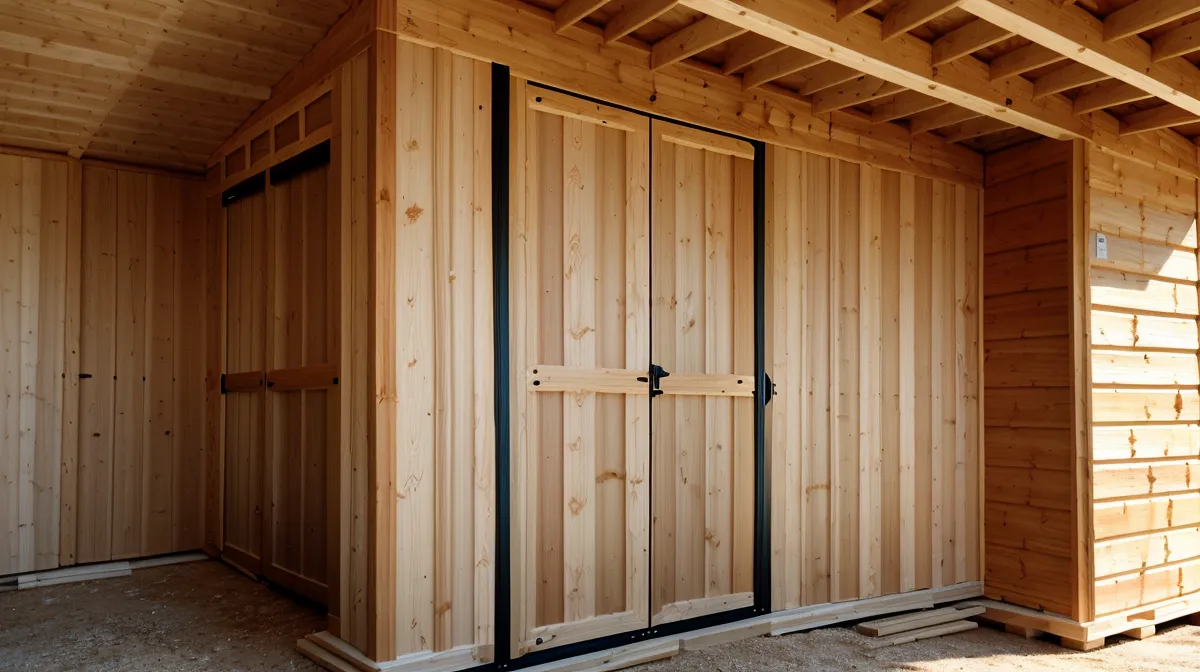
That decision is why people keep asking me some version of the same questions now that the shed sits finished against the side of the garage, six feet tall, built to hold a mower, driveway salt, and the garden tools that used to pile up in the corner. A buddy of mine, who spends his weekends brewing all-grain IPAs in his basement instead of standing at a table saw, asked the most honest version of it: why not just buy a shed kit? Fair question, and it's easier to answer as an actual Q&A than as another blow-by-blow build recap.
Why a Cedar Storage Shed Beats Another Plastic Tote
Plastic totes fail because polypropylene gets brittle in the cold, and Minnesota driveways sit below freezing for a solid third of the year — a few winters of that expansion and contraction and the plastic just gives up. Cedar doesn't have that problem outdoors, partly because Western Red Cedar carries natural oils that shrug off rot and insects without extra treatment, and partly because it stays dimensionally stable through the swing from July humidity to January dry cold, the same reason I wouldn't side an outdoor structure in dimensional pine instead. Cost-wise, a shed like this runs more than a single tote up front. But totes behave more like a subscription you keep renewing without noticing — cheap per unit, expensive over years, and always due again right when you'd rather not think about it.
How Big Should This DIY Shed Actually Be?
Size is the first real decision, and it's less about how much stuff you own than about the footprint you can actually spare. Mine went into a narrow strip between the garage and the property line, which meant drawing a locker rather than a building: four feet wide, two feet deep, six feet tall, sized to swallow a mower, several bags of driveway salt, and whatever garden tools used to clutter that corner of the garage. A decent gut-check: count roughly how many totes you're trying to replace, then size the shed to hold that volume standing up instead of stacked, since vertical storage is the whole point of quitting totes in the first place. Somewhere in there I sketched the first version of that footprint on the back of a receipt, walking the dog around Lake Harriet Bandshell lawn and sizing it against the actual strip of grass I had to work with instead of some ideal plan.
What Joinery Actually Holds Up Outdoors?
Joinery for outdoor builds is its own deep rabbit hole, and plenty of dedicated breakdowns exist on which joints handle wood movement outside versus in a climate-controlled house, so I won't relitigate that here. For a shed like this, the base and wall frames are straightforward butt joints reinforced with screws, and the visible corners are where precision actually matters, since that's what people notice walking past on the driveway. Fitting the trim on the front corner, I held a flashlight behind the miter to check it: a clean 45-degree joint with the beam flat against the wall, and nothing showed through the seam. That told me more about the accuracy of that cut than a tape measure ever could.
Getting the Door Swing Right
Doors are where I actually got humbled. Both got built flat on the bench along the back wall of the garage, an eight-foot slab I put together years ago out of framing lumber, permanently dusted in pencil marks, and I measured the opening carefully, built in an eighth of an inch for expansion, and felt pretty good about it. Then I hung the first door on its hinges and swung it open. It caught on the house siding at about forty-five degrees and stopped dead. I'd measured the gap in the frame perfectly. What I forgot: a hinge pivots outside the plane of the frame, not inside it, so the door needed clearance for the siding it swings past, not just the opening it swings out of. Backing out four screws and shimming the hinge line took maybe twenty minutes once I understood the actual problem, the same shape as most support tickets I used to close: the fix takes five minutes, the diagnosis eats the whole afternoon.
Which Finish Actually Works in an Unheated Garage?
Finish schedule matters more in a Minnesota garage than most plans account for, and I already learned this the expensive way on an earlier project. There's a whole separate writeup on surviving an unheated garage shop through a Minnesota winter if you want the long version. That garage holds enough of a January chill that the cold works up through my boots long before the space heater earns its keep. That's exactly the kind of cold an oil-based polyurethane does not forgive. Applied one January in that shop, a coat of it stayed tacky for nine straight days, dust and stray hair bonding into the finish because the chemistry never got warm enough to cure. For the shed, I switched to a UV-protectant exterior oil and waited for an honest stretch of warmer weather before applying it, which meant the project sat half-finished longer than I wanted, but the finish actually cured this time.
Keeping the Inside From Turning Into a Sponge
Airtight sounds like the goal until you actually put a wet mower or a salt-crusted shovel inside a sealed wooden box and give it nowhere to breathe. A shed built completely tight can trap more moisture than the tote it replaced, so I left a hair of a gap between a few of the back boards instead of forcing every seam dead flush. It's a small thing, invisible from the driveway, but it lets air move instead of just sitting there. Anyone who wants the deeper science on why sealed wood boxes go moldy can chase relative humidity down its own rabbit hole; the practical version is just don't build a cooler when you meant to build a shed.
Tools, Storage, and a Few Other Loose Ends
Cedar dust is fine enough that it'll work its way into the laundry room if nothing's collecting it at the saw, and dust management for a one-car-width shop is a big enough topic that it deserves its own conversation rather than a footnote here. Keeping tools organized once a project like this eats your bench space for a weekend is really its own subject too. I lean on wall storage over digging through drawers, and that decision alone could fill a separate post.
A couple of things are worth knowing no matter your setup. A nominal 2x4 measures 1.5 by 3.5 inches, not a true two inches, and any plan that assumes otherwise throws off your whole frame by a fraction that compounds fast. Use stainless or galvanized fasteners with cedar specifically, as the tannins in the wood react with plain steel and leave black streaks that look like the shed is crying rust.
Picking cedar over other species for an outdoor garage organization project is its own decision tree, since grain direction and species hardness both factor into how a board actually holds up outside, and that's a bigger conversation than fits in a loose-ends section. If you're shopping for a shed plan instead of drawing your own, the difference between a good set and a bad one usually comes down to whether the cut list actually matches the diagrams, which isn't a given even from a paid source.
For anyone still on the fence between another tote and an actual outdoor woodworking project, my read after this build is that the shed wins for anything stored longer than a season (mower, salt, seasonal gear) and totes still win for stuff you're grabbing constantly, like camping gear used twice a summer. I wrote up the much bigger, much dumber version of this same decision in an earlier post about why I risked my marriage and a few fingers on a DIY 8x12 shed, and this four-foot locker is that same lesson applied at a scale my wife actually approved of. It's parked where guests can see it, no cracks, no warping, and every time I open the door for the mower I get cedar instead of the smell of cracked polypropylene.