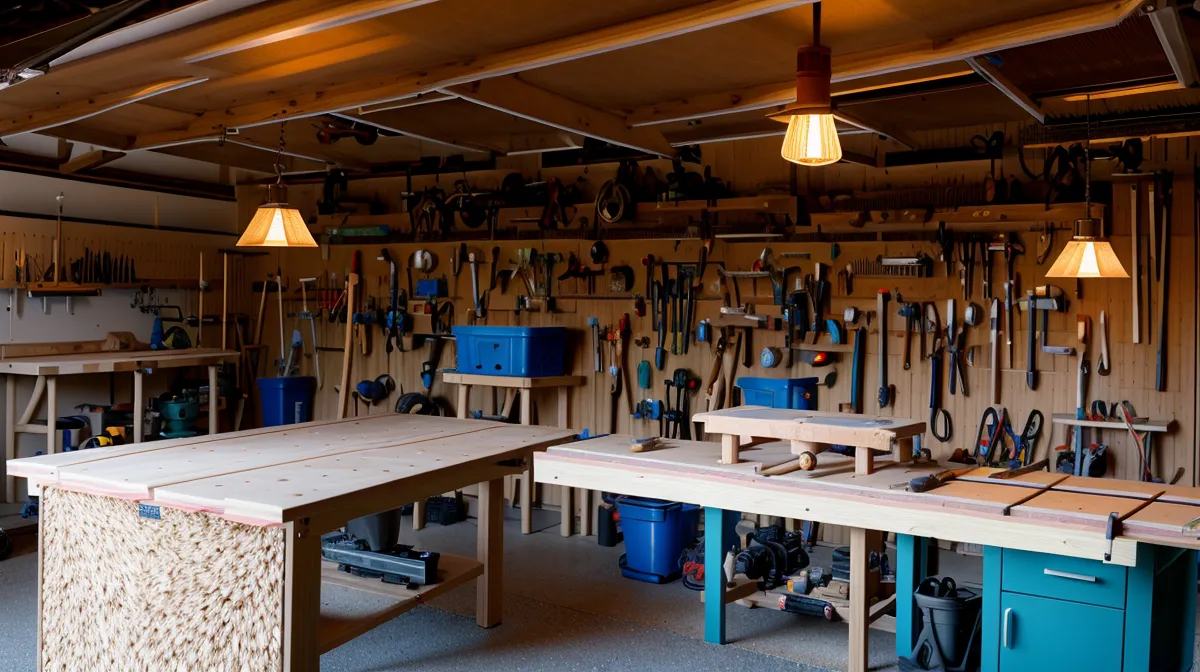
Two hundred pounds of cast iron will teach you more about a Minnesota winter than any woodworking plans ever will. That's roughly what a full-size table saw weighs, and every January mine turns into a slab of ice that no glove fully protects against. Running a garage workshop through a Minnesota winter means constantly asking a version of the same question: is it worth heating the whole space, or is it smarter to just protect the two or three things in a project that genuinely can't handle the cold?
My answer, six winters into working out of an unheated garage in Brooklyn Park, comes down to what the next hour of work actually demands. Marking a joint with cold fingers is a different problem than ripping down a sheet of plywood, and treating both problems the same way wastes either time or money.
Heating the Whole Garage Workshop vs. Heating Just the Job
Marcus, my next-door neighbor, would rather spend a clear cold afternoon at Minnehaha Falls Regional Park than fuss with a space heater, and his approach in the shop reflects that same impatience; he has accumulated more bar clamps than he has ongoing projects, but not much interest in warm-up rituals. His method is to work fast, keep moving, and quit before his hands stop cooperating. I've borrowed it for rough cuts and framing lumber and it holds up fine. It falls apart the moment a project needs any real precision.
Cast iron does not care which camp you're in, either way. A table saw top left out overnight will happily pull the warmth out of a bare hand before you've finished checking the fence, and a concrete slab floor is its own kind of cold sink — standing on one for an afternoon draws heat out of your feet faster than the air temperature alone would suggest. Concrete has a high thermal conductivity, which is the physics term for how efficiently it pulls heat out of anything touching it, boots included. A rubber anti-fatigue mat by the bench breaks that connection, at least, even if it doesn't fix everything else.

What Actually Breaks When the Shop Drops Below Freezing?
Lithium-ion batteries are the first thing to fail, and not gracefully — a drill left out overnight will refuse to power on the next morning, the same way a laptop shuts itself down after living in a cold car all day. Bare cast iron behaves like it's actively trying to rust once a heater gets involved: skin contact leaves enough moisture behind that an unprotected saw top or jointer bed can show orange spots within a day if the humidity spikes while the metal is still cold. Even breathing near a cold square or a set of gauge blocks throws a thin layer of frost across the surface, which sounds minor until you're trying to read a scribe line through it.
None of that is really about the wood, but the wood has its own version of the same problem. Hit a piece of frozen white oak with a chisel and it doesn't slice, it shatters, more like a brittle component failing under load than a material giving way cleanly. Cold doesn't kill every sense out there, though — a cedar board still lets go of its sharp scent the moment a blade bites below the surface, cold shop or not. That contrast is exactly where the two camps split hardest.
The Case for the Forty-Five-Minute Warm-Up
The math behind a forty-five-minute warm-up is simple: below a certain temperature, fingers stop registering fine detail fast enough to trust a tape measure's click, and a sixteenth of an inch stops feeling like a real number. Getting the air up to a workable temperature is really just a convection problem — moving enough warm air around the garage to break the chill without running the heater all day and turning the electric bill into a monthly argument. Once the air cooperates, marking a joint, reading grain direction before a cut, or setting up a dado fence all go back to being controllable. Deciding which joinery type is even worth attempting with half-numb hands is its own rabbit hole, and not one I'm getting into here. A workbench solid enough to plane against without shifting on the slab floor helps too, though building one properly is a separate project entirely.
The Case for Working Cold and Warming Only What Matters
Rough milling, cutting sheet goods, or knocking together shop fixtures don't punish cold hands the same way, and this is where Marcus has a point — heating the whole garage for an hour of crosscutting is money spent for no real accuracy benefit. Picking the right species matters here more than temperature does; pine forgives a lot that oak simply will not. I found that out buying cheap construction-grade pine from a big-box store because it was what happened to be on the shelf, and within two weeks of bringing the boards inside to warm up, every one of them had a visible bow that no amount of clamp pressure pulled back out. Wood movement is a bigger subject than one bad batch of studs, but the short version is that a board reacts to a change in humidity and temperature whether or not that was part of the plan.
Moving the Glue and the Finish Indoors
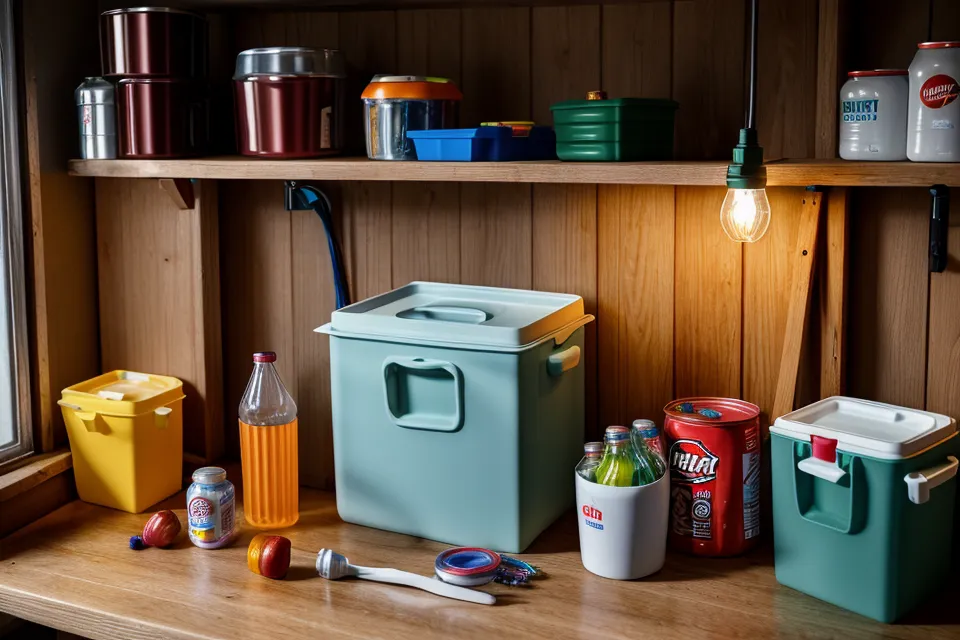
Glue does not care which camp you're in, either. Most yellow wood glue is polyvinyl acetate, and it has a minimum application temperature that a lot of weekend woodworkers don't think about until the glue starts to chalk into a white, crumbly powder instead of bonding. I keep an insulated cooler in the kitchen year-round now, loaded with glue and finish, and carry it out to the garage only for the length of a glue-up before bringing everything back to warmer air. The best glue joint I've made with that cooler-and-cold-garage routine, I only found by running a finger across the seam after peeling the blue tape off — I couldn't feel where one board stopped and the next one started.
Finishing has to move indoors too, and this is where Theo, from my woodworking meetup group, would tell you temperature is only half the problem. He'll re-sand a face three extra times rather than let a barely-visible scratch go under a coat of finish, and he wouldn't dream of doing that final coat in a cold garage where dust settles slower and never gets carried off by any real airflow. The finishing process is its own long list of variables — coats, cure times, sequence — and cold weather just piles another one on top. With the garage door shut all winter, dust management matters more than it does in July too, though that's a separate conversation about vacuums and separators.
Which Approach Wins, Session by Session
Rust is the one problem that punishes both approaches equally. A cold jointer bed left bare will spot within a day once warm, humid air hits it, so a heavy coat of paste wax stays part of the routine no matter which camp I'm in that weekend; an inexpensive tin does the job better than anything fancier I've tried. I learned that after installing a DIY French cleat wall for tool storage and then leaving a level sitting on the table saw overnight; the rust silhouette it left took two hours of steel wool and a fair amount of creative swearing to clear. A DIY woodworking clamp rack keeps enough of the clutter off the bench that this kind of overnight mistake happens less often, at least.
So the choice isn't really heat-everything versus heat-nothing, it's matching the approach to the step in front of you. Heat the whole garage workshop, budget the forty-five minutes, and don't touch a marking gauge until you can actually feel it — that's the right call for joinery, fine hand-tool work, or anything where a sixteenth of an inch matters. Skip the full warm-up and work the way Marcus does for rough cuts, demolition, and sheet goods, and just make sure the glue and the finish get treated like they're leaving the garage for the day regardless. One more thing worth checking before winter starts: whether a downloaded plan's listed build time assumes a heated shop, since judging a set of woodworking plans on realistic time estimates is worth doing before the cold makes that decision for you.