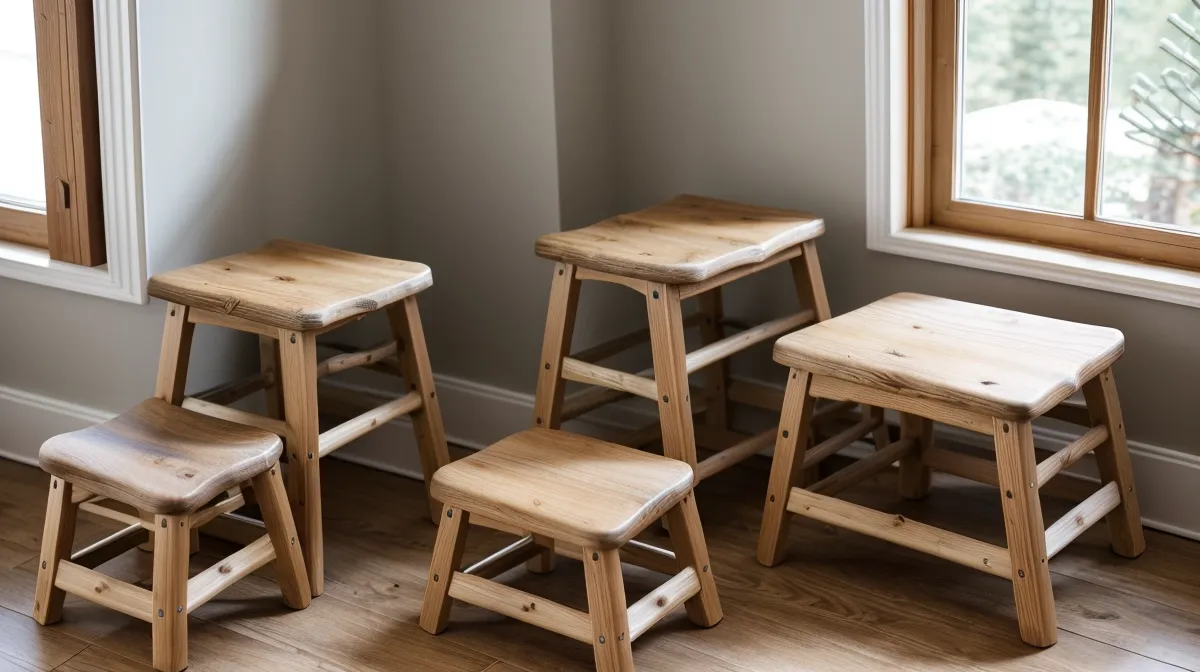
My younger daughter can't reach the bathroom faucet without standing on her toes. That gap between her fingertips and the tap is the whole reason this project exists: a kid's step stool built entirely from 1x8 pine offcuts that had been sitting under my miter saw since a bookshelf build two projects back. This is about as beginner-friendly as garage-workshop woodworking gets: two side panels, a top, a stringer, pocket screws, glue. If you've never built anything beyond flat-pack furniture, this is a solid entry point into woodworking for beginners, and about as close to real DIY furniture as a stool this small can get.
Turning Garage-Workshop Scraps Into a Kid's Step Stool
Pine gets a bad reputation in woodworking circles. Ask around at a lumber yard and someone will steer you toward oak or maple before you finish the sentence "step stool." For a dining table, sure, go hardwood. But this is a stool a kid stands on with wet, soapy feet after a bath, and the slightly open grain of pine actually grips better underfoot than a slicker hardwood would once it's sealed. Softness that would bug me on a table top turns into traction here, a compromise that happens to work in this one case.
Not all pine behaves the same way, and I've learned that lesson before it cost me a finished project instead of just an evening. A while back I grabbed cheap construction-grade pine from the big-box store for a shelf unit, the kind pulled from the framing-lumber aisle rather than the surfaced-boards rack, and within two weeks of bringing it inside it had bowed enough that the shelf sat crooked against the wall. This time I stuck to offcuts from surfaced 1x8 stock I already trusted, plus a fresh box of pocket screws from Ax Man Surplus in St. Paul, since their hardware bins occasionally turn up an odd screw length that regular stores don't stock.
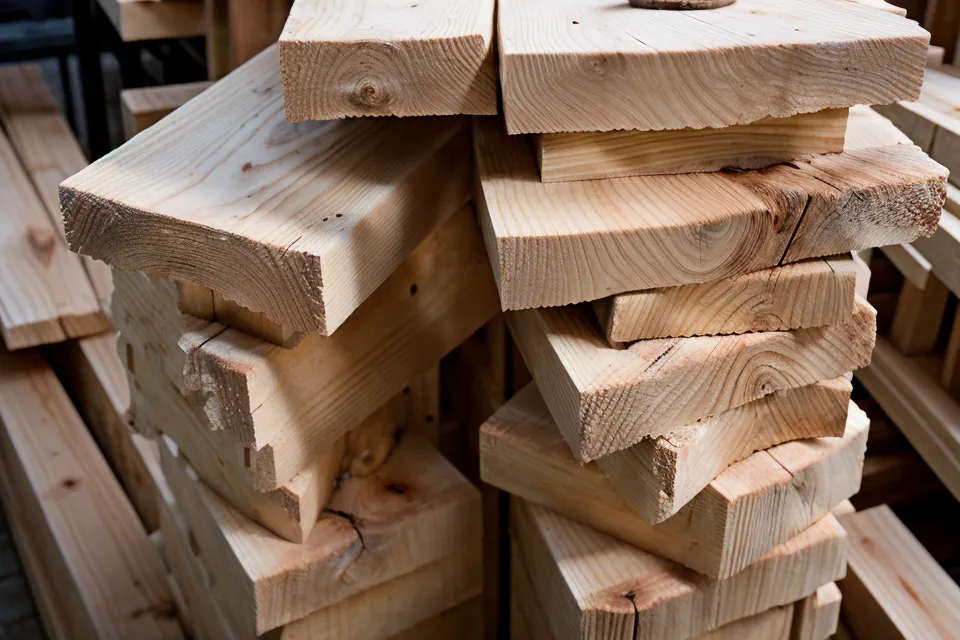
Cutting started with a cut list I'd scribbled on a scrap of cardboard, the same way I used to sketch database diagrams before a planning meeting. A nominal 1x8 isn't actually eight inches wide; the actual width lands at 7.25 inches, and a nominal 1-inch board measures 0.75 inches thick once it's been surfaced. Two side panels at twelve inches, a top platform at fourteen inches, and one front stringer, all cut from that same board using the full 7.25-inch width for depth so the stool would sit low and stable instead of tall and tippy.
Cutting the Pieces Without Trusting My Eyes
Grain direction matters more on a crosscut than most beginners realize, something a guy from my monthly woodworking meetup, Theo Buraczewski, drilled into me. He reads the grain on every board before he'll commit to a cut, even on scrap this cheap. I didn't go quite that far, but I did stop and orient each board so the grain would run the way I wanted it to look across the V-notch at the base, instead of just grabbing whichever offcut was closest.
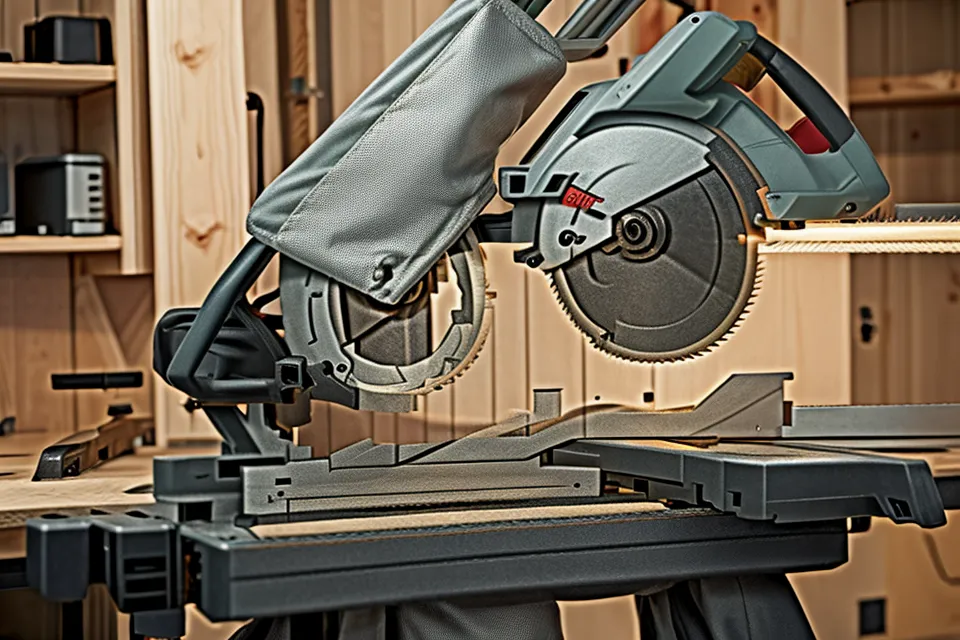
Squareness is where I got sloppy. I ran through the whole cut list without stopping to check whether my miter saw's fence was actually square to the blade, and near the end I laid a straightedge across the top plank and caught a small gap underneath, maybe an eighth of an inch, but enough to throw off every joint downstream. It's the kind of small input error that snowballs the way a wrong config value does three deploys later; you don't see the damage until everything downstream depends on it. I re-squared the fence and shaved the affected pieces before moving on.
Does Pocket-Hole Joinery Actually Hold Up?
Pocket screws are just one joinery option among several: dowels, dadoes, and mortise-and-tenon all do the same basic job of holding two boards together, and pocket holes happen to be the fastest one for a beginner with a jig and a drill. I set my jig for 3/4-inch material, loaded 1.25-inch screws, the length that keeps a screw from poking through the top of a board this thick, and clamped the sides to the front stringer before driving anything home.
Dry-fitting the whole carcass before glue went on saved me from a mistake I wouldn't have caught otherwise. I set all four corners down on the concrete floor with no glue and no screws yet, just clamps holding things in place, and watched to see if any corner rocked instead of sitting flat. One did, barely, but enough to notice, so I took the joint apart and sanded the offending leg down until it sat flush before committing to glue.
Glue-up went faster than the cutting had, though I ran my shop vac over the bench first since pine sawdust gets into everything if you let it pile up between steps. A dust-management habit like that has saved me more cleanup time than any tool upgrade has. Wood movement matters a lot more on a wide glued-up panel than it does on parts this small, so a stool this size shrugs off seasonal humidity swings in a way a solid-wood tabletop never would.
Sanding, Finishing, and Everything Nobody Warns You About
Sanding is the part of every build I complain about and then forget I complained about by the next project. I started at 80-grit to knock down the saw marks and worked up to 220 for the final pass, rounding the edges just enough that a toddler's shin wouldn't suffer a direct hit if she bumped it. Higher grit numbers just mean finer abrasive, nothing more mysterious than that.
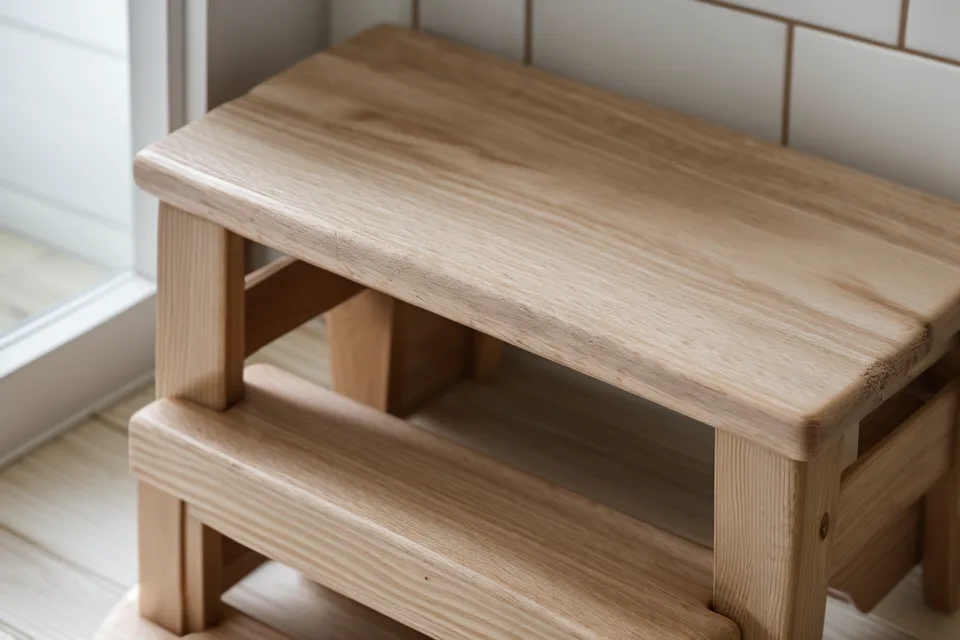
Finish went on light: a water-based poly that dries fast, doesn't stink up a garage attached to the house, and won't amber the pine the way an oil-based product would. I've written before about my mistakes building a DIY modern coffee table, where I sanded the corners so aggressively the lines went soft and mushy, so this time I checked my progress by hand every few passes instead of running the sander until my arm got tired. Getting a finish right is its own rabbit hole of prep, product choice, and drying conditions, more than a stool this size really needed, but worth knowing exists before you commit to a bigger piece.
What Does a Scrap-Pile Stool Teach You About Bigger Projects?
Marcus from next door wandered over while I was putting on the final coat, looked at the edges a beat too long, and said it looked "pretty good" in the tone of a guy who thinks his own finish work is better and won't say so directly. He's had his own bench going in his garage since I talked him into borrowing a drill a few winters back, and he's never once admitted he checks my joints for gaps before he compliments them.
The real test happened in the bathroom, not the garage. I set the stool down, and within minutes my daughter was standing on it reaching the soap dispenser without any of the tiptoe balancing act that started this whole project. It's not fine furniture. It's pine, pocket screws, and an afternoon of finish, but it solved an actual problem using material that was otherwise headed for the scrap pile, which is the whole appeal of a project like this one.
None of this needed a purchased plan. A good downloadable plan earns its keep on a complicated build, but for something this simple, sketching your own cut list beats the time spent vetting someone else's. It also barely cost anything beyond pocket screws, glue, and sandpaper, which matters when you're trying to keep a hobby's budget in check rather than blowing it out project by project. Working in an uninsulated garage in late fall slows down glue and finish dry times more than people expect, though that's a bigger topic than one stool deserves. My storage situation is still a mess I haven't solved, and my bench could use an upgrade too, but neither one stopped this project from getting done.
If there's one thing this build confirmed, it's that dry-fitting everything before glue touches wood catches more mistakes than careful measuring ever will on its own. That's a habit I only really trusted after about eight weeks of forcing myself to do it on every project instead of skipping it when I felt confident. If your garage looks more like storage than workshop right now, projects like this are a better starting point than anything with a long joinery list. I felt the same way building a DIY picnic table using beginner friendly woodworking plans. Most of woodworking turns out to be building a series of boxes and then hiding the gaps where the boxes don't quite meet.