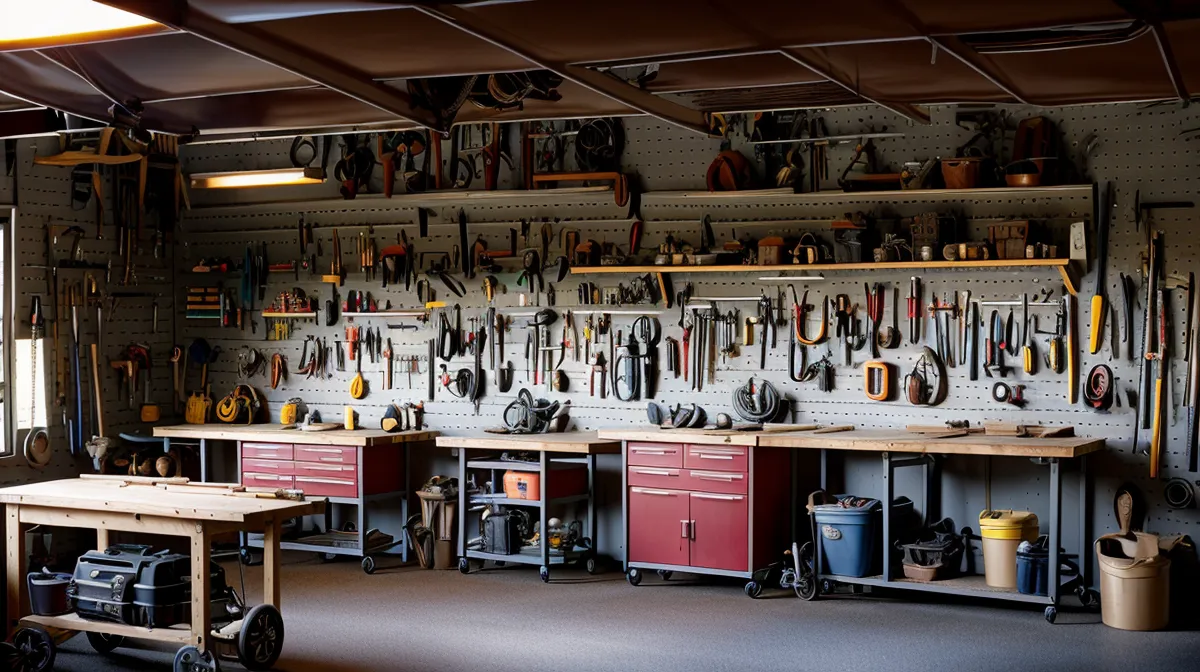
Late one winter evening out in the garage, I tried paring a mortise in walnut and watched the chisel tear fibers instead of slicing them. The edge slipped forward, skating right past my layout line and gouging the workpiece clean through. It was frustrating, messy, and entirely my own fault.
Like a lot of folks who stumbled into this craft during COVID lockdown, my first response to edge tools was deep denial. I built a notoriously lopsided bookshelf back in 2020 with dull tools and sheer stubbornness. But as I transitioned half our suburban two-car garage into an active workshop—tackling everything from cutting boards to a dining table my wife actually lets guests sit at—I realized something annoying. Tool steel does not care about your enthusiasm.
In an uninsulated Minnesota garage, maintaining an edge is doubly tricky. You are constantly battling sub-zero cold steel that hates cutting, followed by spring thaws where humid ambient air rolls in under the garage door and condenses on chilled cast iron, practically inviting flash rust overnight. For a long time, I treated sharpening like a server migration at my day job: something stressful, postponed as long as possible, requiring four uninterrupted hours and five different water stones.
It turns out that approach is completely backwards.
The Ninety-Second Habit That Saved My Weekends
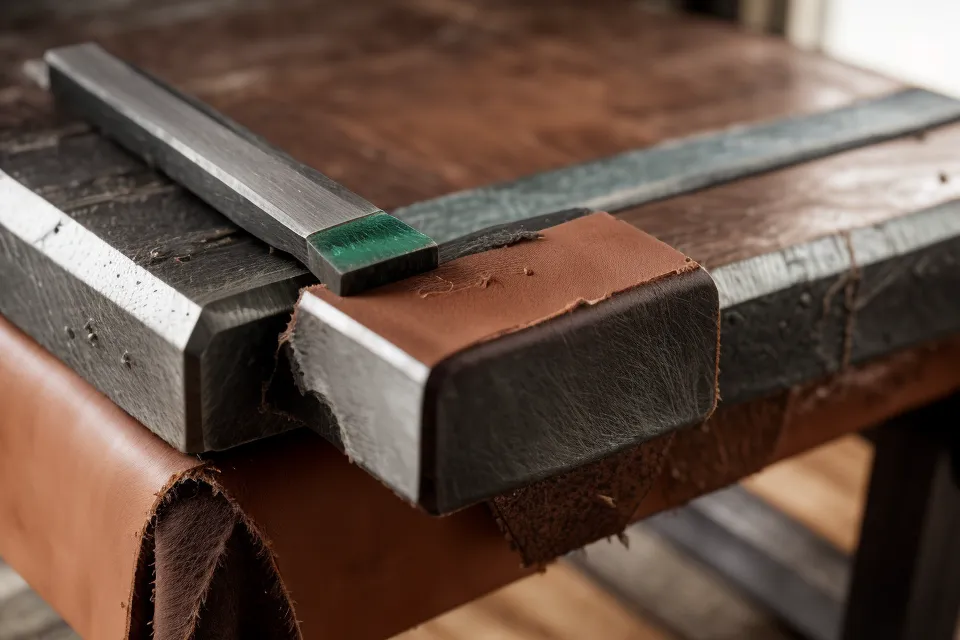
Over the past winter through late summer (about eight months of continuous garage time), I changed my entire philosophy. Instead of waiting until an edge was completely chewed up, I set up a dedicated, compact sharpening corner right on the edge of the bench. If pulling out sharpening gear takes more than fifteen seconds, you will not do it. You will just press harder on your workpiece until something breaks or bleeds.
Here is what routine maintenance actually looks like for me now:
- The Daily Strop: Keep a scrap piece of thick leather glued to flat plywood on your bench, loaded with green chromium oxide compound. Before putting away any bench chisel or hand plane iron at the end of an evening, give it twenty trailing strokes on the leather.
- The Micro-Bevel Touchup: When stropping no longer brings back the bite, I take two minutes on a single 1000 grit splash-and-go stone. No soaking, no diamond plates, no leveling jigs. Just a few passes on the secondary bevel.
- The Wipe-Down Barrier: Every piece of bare steel gets a quick swipe of paste wax or camellia oil before the garage lights go out, preventing condensation from ruining the edge before the next session.
Touching up an edge on leather for ninety seconds before walking back inside into the warm house prevents ever having to re-grind the primary bevel on a Saturday afternoon. That single shift gave me back hours of project time.
The Geometry Trap: Angles and Common Sense
When you start reading woodworking forums, you get buried under debates about degrees. Most factory bench chisels ship with a standard primary bevel angle around 25 degrees. That angle gives you great clearance, but the edge is relatively thin. To make it durable enough to withstand mallet strikes into dense lumber, woodworkers typically add a secondary micro-bevel at roughly 30 degrees right at the cutting tip.
For a long time, I thought getting that secondary bevel to 30 degrees required elaborate roller guides and a digital angle gauge. If my guide slipped to 31 degrees, I felt like a failure who had ruined the steel. But steel is forgiving. In an everyday garage shop, consistency matters far more than theoretical perfection. Whether your micro-bevel lands at 29 or 31 degrees is irrelevant to your mortise; what matters is that the two planes meet cleanly without a rolled burr.
If you have ever read my piece on essential table saw safety tips for every beginner woodworker, you know I care a lot about minimizing unpredictable tool behavior. A dull hand tool requires significantly more bodily force to push through grain. The moment you are leaning your chest into a chisel handle to get it through an end-grain cut, you have lost control. If the blade suddenly catches or tears free, your hands follow the momentum.
Why Mirror-Polished Isn't Always the Answer
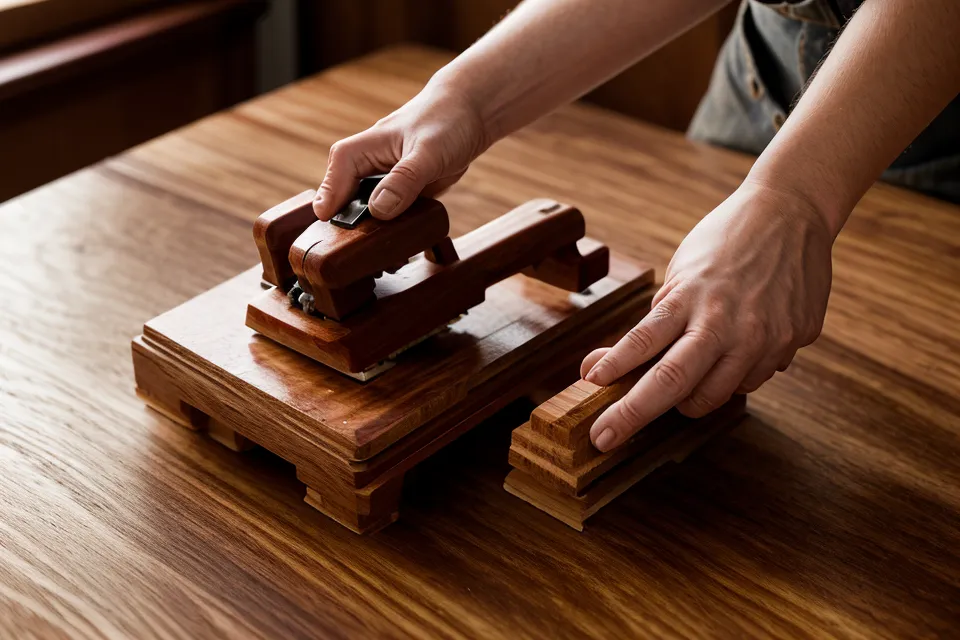
Here is something that took me a long time to admit, and it runs counter to every hyper-satisfying video online: stop chasing a surgical razor edge on every single tool. Keeping blades slightly duller—or rather, stopping at a working tooth rather than polishing up to 16,000 grit—significantly increases control and safety when dealing with aggressive, high-friction woods like white oak or hickory.
One humid Saturday in July, I spent an hour polishing a block plane iron until I could read the serial numbers on my garage light bulbs in its reflection. I took it over to a piece of dry red oak. The edge was so slick and acute that instead of biting reliably into the fiber, it repeatedly skated over the surface until I leaned in hard. The result was a deep, jagged crescent torn into an oak tabletop because I pushed a dull hand plane with all my body weight.
When an edge is polished down to an absolute mirror, it glides effortlessly through softwoods like pine or basswood. But on interlocking or ring-porous hardwoods, an ultra-refined edge can act unexpectedly slippery if your entry angle is off by a hair. Leaving an edge honed at a solid baseline 1000 grit gives the cutting edge microscopic teeth. That subtle bite grips tough grain immediately instead of glancing off under hand pressure.
There is a massive difference between a tool that is genuinely dull from neglect and one that is sharpened to a sturdy, utilitarian working edge. You want predictable cuts, not laboratory specimens.
Rust, Humidity, and Winter Garage Realities
By early spring in Minnesota, tool steel goes through hell. One freezing evening last February, my garage was hovering around twelve degrees Fahrenheit. A warm front moved in forty-eight hours later, bringing fifty-degree air saturated with melted snow moisture. Walking out to the shop, every cold metal surface—from the cast iron table saw top to the sides of my chisels—was visibly dripping wet with condensation.
Corrosion will destroy a fine cutting edge faster than hardwoods will. The microscopic apex where the two bevels meet is only fractions of a micron thick; a tiny speck of rust right on that apex acts like a serrated saw notch, immediately dulling the cut.
I keep a clean rag soaked in cheap paste wax sitting in an airtight cookie tin on my rolling cart. After finishing a cut or truing a joint on my mobile workshop assembly table, I wipe the metal down before stepping away. It takes five seconds, smells faintly like turpentine, and forms a barrier that keeps spring humidity from eating your edges alive.
The goal of garage woodworking is not to build a museum of spotless tools or film high-definition slow-motion shaving clips for the internet. The goal is to walk out to your shop after a long day of software tickets or client calls, pick up a blade, and hear the crisp, effortless whisper of cherry grain curling off a freshly stropped blade like tissue paper.
Keep your routine short, do not over-polish away your control, protect the steel from the weather, and keep making sawdust.