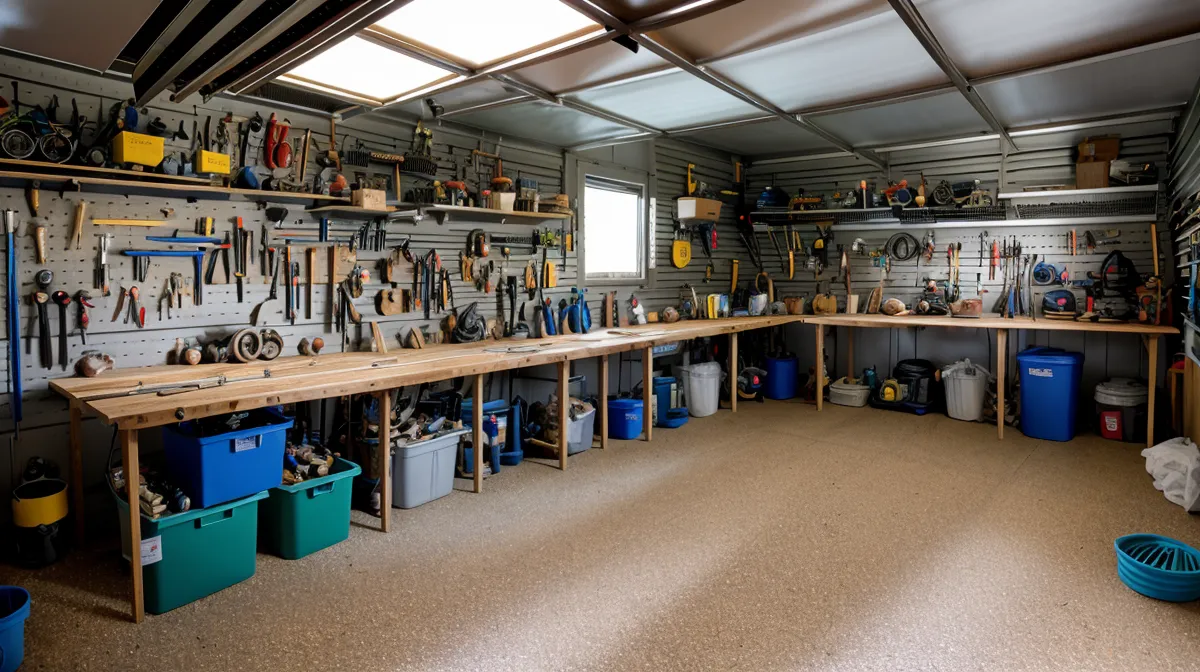
It was well after dark on a Tuesday in mid-February, and the temperature in my suburban Minneapolis garage was dropping faster than my confidence. I was dry-fitting a walnut coffee table—a project I’d spent three weeks prepping—when the silence was broken by a sickening 'crack.' One of the legs, which I’d glued up just hours earlier using a standard yellow glue, had simply separated. In the IT world, we call this a 'deployment failure,' but in the workshop, it felt like a personal insult from the laws of physics. The culprit? The Minneapolis freeze had compromised the adhesive before it could fully cure.
Before we get into the sawdust and spreadsheets of my testing, I want to be clear: this site uses affiliate links. If you buy something through these links, I earn a commission at no extra cost to you. I only recommend plans and tools I have actually used in my own workshop—usually because I broke something first and had to find a better way. Full transparency policy here.
That mid-February disaster turned into a seven-month obsession. I realized that my project manager brain needed a systematic way to test glues. I didn't want the marketing fluff; I wanted to know what actually holds up in a humid, non-climate-controlled garage. I lined up half-empty bottles on my workbench, ranging from basic Polyvinyl acetate (PVA) to heavy-duty polyurethane, and started a rigorous testing cycle that lasted through the end of this summer.
The Testing Methodology: More Than Just 'Sticky Stuff'
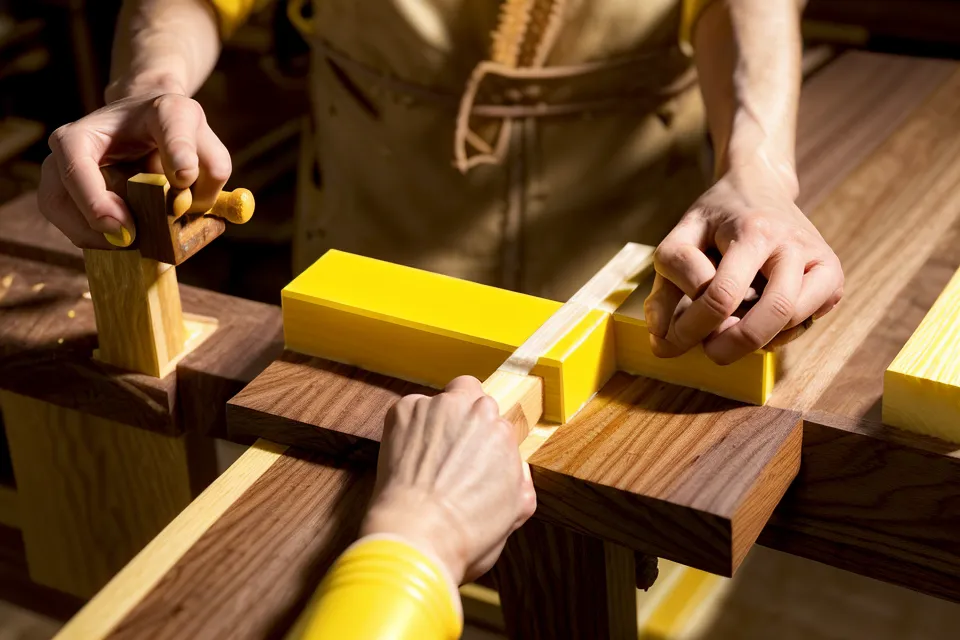
I treated this like a long-term QA project. Over the course of late April dampness and the stifling humidity of early July, I tested four different brands across several variables: open assembly time, ease of cleanup, and bond strength under stress. I wasn't just gluing scrap wood together; I was working through a stack of complex furniture blueprints I'd recently downloaded to see how these glues handled real-world joinery.
One of the first things I learned is that we often overthink the brand and underthink the environment. During the July humidity, for instance, I noticed that the open assembly time—the window between applying the glue and needing the clamps on—shrank by nearly forty percent. If you’re building something complex, like a DIY bathroom vanity cabinet, that ticking clock is the difference between a perfect fit and a mallet-swinging nightmare.
I also kept a close eye on industry standards. For most of my indoor furniture, I looked for glues meeting ANSI/HPVA Type II water resistance. While it's not meant for underwater use, it handles the occasional spilled drink or humid Minnesota summer without the joints swelling like a corrupted database. I even tracked the shelf life; most PVA glues only last one to two years in a climate-controlled space, and much less if they've survived a freeze-thaw cycle in a garage shop like mine.
The Contrarian Angle: Why Rigid Isn't Always Better
Here is where I might lose the traditionalists. Most woodworkers swear by the most rigid, rock-hard yellow glue they can find. But after months of watching how my furniture reacts to the vibration of kids running around and the seasonal wood movement of the Midwest, I’ve developed a different theory. Standard PVA wood glues are actually inferior for high-vibration furniture, like dining chairs or heavy-use tables.
In these cases, I’ve started favoring flexible Polyurethane-based adhesives. They prevent joint fatigue better than rigid, bond-breaking yellow glues because they allow for a microscopic amount of 'give' without failing. It’s like the difference between a rigid bridge that cracks in an earthquake and one designed to sway. When I built my mobile workshop assembly table, I used polyurethane for the base to handle the constant vibration of power tools, and it hasn't budged an inch since late August.
However, polyurethane is a messy beast. I remember one humid afternoon in late July, feeling the tacky, cooling sensation of wood glue drying on my fingertips while the smell of fresh walnut sawdust mixed with the heavy air. I’d forgotten to wear gloves, and that glue stayed on my skin for three days—a permanent reminder to respect the chemistry.
Clamping Pressure and the Myth of 'More is Better'
One of the biggest mistakes I made early on—and I still see it in every 'beginner' YouTube video—is cranking down the clamps until the wood groans. In my engineering mind, more pressure equals a tighter bond. Wrong. Woodworking engineering specs actually suggest a clamping pressure for hardwoods of about 200-350 psi. Any more than that, and you risk the 'starve the joint' phenomenon.
This happens when you squeeze out so much adhesive that there isn’t enough left to actually penetrate the wood fibers. It’s the woodworking equivalent of over-optimizing a piece of code until it doesn't actually run anymore. I found that using a notched spreader helped me get a consistent layer, ensuring I had enough 'wet' surface area without creating a lake of squeeze-out that I’d have to sand off later.
Speaking of sanding, I once tried a cheap silicone brush I found at a big-box store that promised 'easy cleanup.' Instead, it shed plastic bristles into my glue line like a dog in springtime. I spent an hour picking bristles out of a dovetail joint with tweezers. Now, I stick to simple, disposable spreaders or even just a scrap piece of wood. Sometimes the low-tech solution is the most reliable.
The Pivot: Why Plans Matter More Than Glue
By late August, after seven months of testing, I reached a sobering conclusion. A ten-dollar bottle of the world’s best glue is only as good as the lumber it’s holding together—and more importantly, the accuracy of the cuts. I spent years blaming my 'weak' glue for joints that were actually just poorly measured. I would look at the 'lopsided bookshelf' in the corner of my garage—a permanent monument to my early days of guessing measurements—and realize the glue wasn't the problem. My lack of a roadmap was.
I finally stopped the 'lopsided bookshelf' streak when I invested in a massive library of professional plans. Having access to TedsWoodworking and its 16,000 plans changed the way I approach the 'logic gates' of joinery. Instead of eyeballing a tenon, I had a step-by-step blueprint with exact measurements and cut lists. When your joinery is precise, the glue only has to do its job, not fill in the gaps of your mistakes.
I’ve also found that for outdoor projects, like the ones in the 12,000-plan collection from My Shed Plans, the choice of adhesive is even more critical due to moisture. But again, a plan that accounts for wood expansion will do more for the longevity of a shed or a bench than any 'miracle' glue ever could. If you're looking for broader DIY projects, Self Sufficient Backyard is a great resource, though it's less about fine furniture and more about functional homesteading structures.
Final Observations from the Workbench
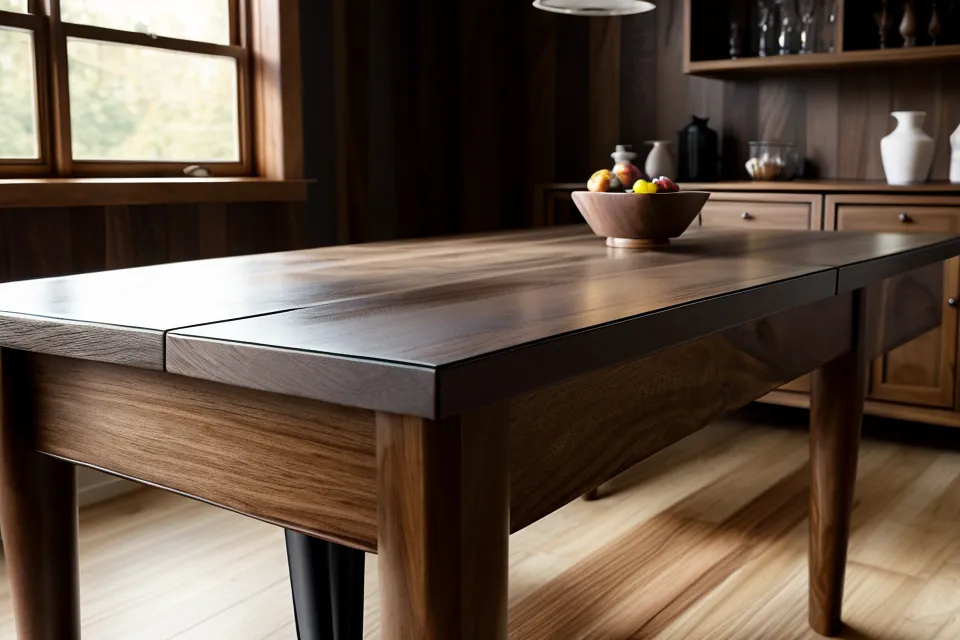
As I sit here in early October, looking at the dining table my wife actually lets guests see, I’ve realized that woodworking is about 20% tools, 20% materials, and 60% patience. My glue tests taught me that there is no 'best' adhesive—only the right one for the specific environment and project type.
- Check your expiration dates; old glue is a recipe for heartbreak.
- Use polyurethane for pieces that will see high vibration or movement.
- Never glue in temperatures below 55 degrees unless the bottle specifically says you can.
- Invest in easy pocket hole joinery tips for those hidden structural joints where glue is just a secondary backup.
The biggest takeaway? Stop guessing. Whether it’s the clamping pressure or the dimensions of a drawer slide, having a professional plan is the only way to move from 'guy with a garage' to 'guy who builds furniture.' I highly recommend checking out TedsWoodworking if you want to skip the trial-and-error phase that cost me so many pieces of expensive walnut. The current price is on the vendor's page and can change, but for 16,000 plans, it’s been the best 'upgrade' my workshop has ever seen. Now, if you'll excuse me, I have some sawdust to sweep and a new set of plans to print out for a winter project.